
Bedbugs: What They Look Like, the Tell-Tale Signs, and How to Get Rid of Them for Good
Wondering whether you've got bedbugs? Here's what a real bedbug looks like, the signs to watch for at home, how to tell bedbug bites from mosquito bites, and the steps to get rid of bedbugs at the root.
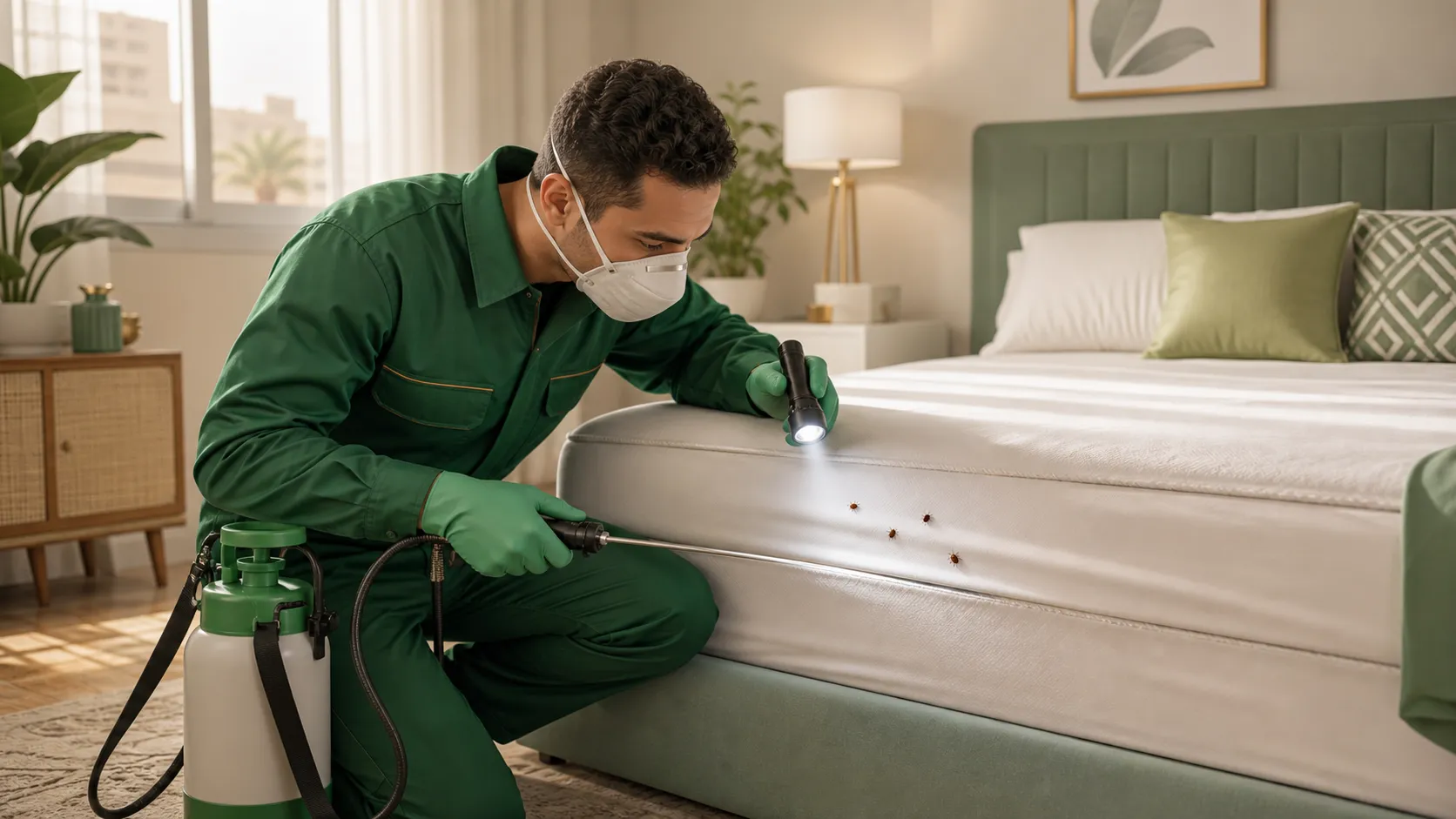
You wake up to an itchy patch of red marks on your neck and arm, look around the room, and there’s nothing there: no buzzing insect, nothing flying past your face. So you spend the morning wondering what on earth bit you. That, more often than not, is bedbugs at work: they hide by day in seams and cracks, then come out at night while you sleep to feed. The trouble is that plenty of people go for months without realising bedbugs are the cause, so they treat the wrong thing while the infestation quietly spreads. In this guide we’ll show you what a real bedbug looks like and the stages it goes through, how to confirm it’s in your home from the signs it leaves, the difference between bedbug bites and mosquito bites, and, above all, how to get rid of bedbugs at the root so they don’t come back.
What a Real Bedbug Looks Like and Its Life Stages
The first question almost everyone asks while searching the room is what bedbugs actually look like, because they’re so easy to muddle up with other tiny insects. An adult bedbug is roughly the size of an apple seed or a lentil, so you can see it with the naked eye if you look carefully. It’s reddish-brown, with a body flat from top to bottom and broad, a bit like a slightly squashed oval. What gives it away is the way it changes with feeding: when it’s hungry it’s thin and flat, so it can slip into the narrowest of gaps, and once it’s had a blood meal it swells up, lengthens, and turns a darker reddish or deep brown.
Bedbugs have no wings, which means they neither fly nor jump. Keep that in mind: if you see something flying or hopping, it isn’t a bedbug. Bedbugs get around by walking, and they walk surprisingly fast when they’re disturbed and trying to scuttle back into the dark.
To identify a bedbug correctly, it helps to know it passes through several stages, and each one looks a little different:
- The eggs: very small, whitish and almost see-through, roughly the size of a pinhead. You’ll find them glued in clusters along seams, cracks and corners, hard to spot unless you look really closely, ideally with a magnifying glass.
- The nymphs (young bedbugs): these hatch from the eggs. When they first emerge they’re tiny and so pale they’re nearly translucent, hard to notice by eye, especially before they’ve fed. As a nymph eats and grows, it darkens and starts to resemble the adult.
- The adult: the final form described above, the flat, broad, reddish-brown insect capable of laying eggs and keeping the life cycle going.
The key point is that bedbugs feed on blood at nearly every stage: both the nymph and the adult need a blood meal. That’s why they stay close to you, within easy reach of where you sleep. The most common place you’ll find them is in the mattress seams and along the edges of the bed and the sofa, and also behind the headboard, inside cracks in the wood, and behind the remote control unit; in heavier infestations they reach behind plug sockets and picture frames and into the folds of nearby curtains. If you’re searching, start with the mattress, its edges and its seams: that’s your first and most important port of call.
The Signs of Bedbugs in Your Home
You won’t always spot the insect itself, particularly early on when numbers are low and it’s hiding well. That’s why it pays to learn to read the signs, because they confirm bedbugs are present even when you haven’t glimpsed one. Here are the clearest bedbug signs, and if you find them, the situation is serious:
- Bites and itching you notice first thing in the morning: usually in rows or tight clusters, on the parts exposed while you slept, such as the neck, shoulder, arm and leg. If they keep coming back every time you sleep in the same bed, that’s a strong indicator.
- Tiny blood spots on the sheet or pillow: these happen when you roll over onto a feeding bedbug, leaving a small smear of blood.
- Small brown or black specks in the mattress seams: bedbug droppings, which gather as fine dots packed in a line along the seam or in the corners and edges of the bed.
- Tiny shed skins or translucent casings: bedbugs shed their skin as they grow, so you’ll find these casings wherever they hide.
- A faint, unpleasant smell: in heavier infestations there’s an odd, slightly sweet and musty smell coming from a build-up of bedbugs.
- The bedbug itself or its eggs: if you search the seams carefully you may catch sight of the insect or small clusters of white eggs.
The simple rule: if you find just one sign, keep looking. If you find two or more together, the likelihood of bedbugs is very high, so don’t waste time second-guessing. Every day that passes means more of them and a harder job to treat. Far better to confirm it early, and if you’d like a specialist’s view, get in touch and someone who knows what they’re looking at can inspect your home and tell you what stage you’re at.
Bedbug Bites vs Mosquito Bites
This is one of the questions we hear most, and the difference between bedbug bites and mosquito bites matters because mixing them up delays treatment for months. Plenty of people stay convinced they’re being bitten by mosquitoes, buy a repellent and shut the windows, while the bedbugs sit happily in the mattress the whole time. Here’s the difference, set out precisely.
A bedbug bite usually comes in a line, a row or a tight cluster, because the bug bites, shuffles along, and bites again as it searches for the best spot. It shows up on the areas exposed during sleep, such as the neck, shoulder, arm and leg. The itch tends to linger, and it recurs reliably every time you sleep in the same place. And you never feel it happen, because it feeds while you’re fast asleep.
A mosquito bite is usually single, scattered in random spots with no pattern. It puffs up quickly into a red bump and settles down again fairly quickly too. And you’ll often have heard the mosquito whining or felt it beforehand, because mosquitoes bite at any time of day, not just while you sleep.
To make the difference clearer, take a look at this table:
| Aspect | Bedbug bite | Mosquito bite |
|---|---|---|
| Shape and pattern | Rows or clusters in a line | Single bites, scattered with no pattern |
| Timing | While you sleep at night | Any time, day or night |
| Location | Areas exposed during sleep | Any exposed area |
| What you feel at the time | You never feel it | You may hear whining or feel it |
| How long the itch lasts | Lingers longer | Settles relatively quickly |
| Recurrence | Reliably every time you sleep in the same place | Random, depending on whether mosquitoes are about |
The practical rule: if the bites come back reliably every time you sleep in the same bed, appear in rows, and you feel nothing as you sleep, it’s most likely bedbugs rather than mosquitoes. Bear in mind that some people’s skin doesn’t react to bedbug bites at all, so you could have an infestation without feeling a single bite; in that case the other signs, like blood spots and droppings, are what give it away. And if you notice bites alongside marks on your ankles and lower legs in particular, that may be a different problem altogether and you may need to look into flea control.
How Bedbugs Get Into Your Home
It’s a natural question for anyone who’s found bedbugs: “My home is clean, so where did these come from?” Let me put your mind at rest: cleanliness has nothing to do with it, and the misconception leaves a lot of people blaming themselves for no reason. Bedbugs aren’t looking for dirt or food the way cockroaches are. They’re after one thing only: blood. That’s why the cleanest home in the world can still get bedbugs if they arrive by one of these routes:
- Second-hand furniture: one of the most common causes. A mattress, sofa or bed handed down or bought used can be carrying bedbugs and their eggs without anyone noticing.
- Luggage: when you stay in a hotel or a furnished flat that has bedbugs, the insect hitches a ride in your bag or clothes and comes home with you. This is the single biggest route by which bedbugs travel between places anywhere in the world.
- Visits and clothing: a bedbug can travel in the bag or jacket of someone visiting you, or transfer across if you’ve sat somewhere that’s infested.
- Neighbours and adjoining flats: in blocks of flats, bedbugs move between units through cracks, pipework and electrical conduits, especially when someone close by has a heavy infestation.
- Public places: seats on public transport, the cinema, waiting rooms, anywhere you sit for a while that happens to be infested.
The single most useful takeaway: a bedbug is a hitchhiker, not a flyer. It doesn’t come in on its own from outside the window the way a mosquito does; it travels on furniture, in bags, and with people. So prevention starts with checking anything second-hand before you bring it indoors, and handling your luggage carefully after any trip. Once you understand how bedbugs get in, you can close these doors and stop an infestation before it starts, or at least catch it early.
How to Get Rid of Bedbugs, Step by Step
Now we’re at the heart of it: actually getting rid of bedbugs. Let me be straight with you: a bedbug isn’t an insect you kill with one spray and forget. This is an enemy that hides well and whose eggs are protected, so it needs an organised plan over more than one stage. Here are the steps you can take yourself to reduce an infestation, and then when to hand it over to a specialist.
1. Wash your bedding at a high temperature. All the soft furnishings around you, the sheets, pillowcases, covers and any clothes near the bed, should be washed at the highest temperature the fabric can take, then dried thoroughly on a high heat. High heat kills bedbugs and their eggs, and it’s one of the most effective weapons you have at home.
2. Vacuum the mattress seams, the bed and the sofa. Go carefully over every seam, edge and corner, paying close attention to the cracks. This lifts out a large share of the bedbugs, eggs and shed casings. One thing that really matters: as soon as you’ve finished, empty the vacuum into a sealed plastic bag and put it straight outside, so the bedbugs can’t crawl back out.
3. Cut down on clutter around the bed and seal the cracks. The fewer places a bedbug has to hide, the better. Clear the clutter from under the bed and behind it, then seal the cracks in the woodwork and the wall nearby with filler or silicone to close off their hiding spots.
4. Professional treatment in two stages. This is the part that genuinely makes the difference. The steps above reduce the problem but rarely eliminate it, because bedbugs hide in places the vacuum and the wash never reach, and the eggs stay protected. Proper treatment comes in two stages: one that hits the bedbugs in every hiding place, and a follow-up after a carefully timed interval that hits the nymphs hatched from the eggs, before they grow up and start laying again.
The crucial point: steps 1 to 3 are a good supporting weapon, but completely eliminating bedbugs needs experience in reading an infestation, approved products, tools that reach the narrow cracks, and, above all, properly timed follow-up. If it has spread, specialist bedbug control reaches every hiding place, closes off the life cycle, and gives you a written guarantee against recurrence.
Why Home Remedies Fail
Plenty of people try home remedies or something from the supermarket before turning to a specialist, and that’s understandable: nobody likes spending money before trying the cheaper option. But bedbugs in particular get the better of most of them, and the result is that you spend time and money while the problem grows. Here’s why, so you know what you’re up against:
- Off-the-shelf sprays only kill the bedbugs on the surface at the moment you spray them; they don’t reach the nest or the eggs tucked inside the cracks. A few days later the eggs hatch and the problem returns as though you’d done nothing.
- Paraffin, alcohol and folk recipes are a genuine fire hazard, and their effect is temporary, limited and evaporates quickly.
- Throwing out the mattress on its own doesn’t solve it, because the bedbugs are spread through the bed, the sofa and the cracks too, not just the mattress. So you throw out something expensive and the infestation is still there.
- Random spraying in large quantities makes the bedbugs flee to places further away rather than gathering in one spot, so the infestation spreads through the home instead of being contained.
- Repellents and scents may move bedbugs from one spot to another for a while, but they don’t kill them, so they shift the problem rather than solving it.
To make the difference between treating it yourself with home remedies and professional treatment clearer, take a look at this table:
| Point | Home remedy | Professional treatment |
|---|---|---|
| Reaching the nest and eggs | Limited and superficial | Complete, across every hiding place |
| Dealing with the eggs | Almost none | Two-stage treatment that closes the cycle |
| Follow-up | Usually none | A core part of the plan |
| Safety | Inconsistent and sometimes hazardous | Approved products at measured doses |
| Long-term result | Temporary, and it returns | Lasts, with a guarantee |
The bottom line: a home remedy may delay or reduce the problem, but it rarely closes it off for good. The difference between you and a specialist isn’t just the type of product; it’s knowledge of the insect’s behaviour, where it hides, and the method, dose and follow-up of the treatment. Getting it done right the first time works out cheaper than spending on remedies that fail one after another while the infestation grows.
When You Need a Specialist Firm
Not every bedbug infestation needs a specialist that very moment, but some signs make it clear the time for home remedies has passed. Keep an eye out for these:
- The infestation has spread to more than one room: the bedbugs have reached an advanced stage, and dealing with them needs a thorough inspection and a plan that covers every focal point at once so they don’t escape from room to room.
- The bites keep coming back despite cleaning and spraying: if you’ve done the home steps and fresh bites are still appearing, the bedbugs have reached places you can’t get to, and that’s a job for a specialist.
- You’ve found signs of an old infestation: a large amount of droppings, casings and a smell mean it’s been there a while and has multiplied, which calls for a stronger plan.
- You’ve been trying for months and the problem keeps returning: if you’re caught in a cycle of spraying and recurrence, you’re going round in circles. A specialist breaks that cycle with proper diagnosis, reaching the eggs, and follow-up.
- You live in a block with an infestation at the neighbours’: the problem isn’t in your hands alone, and bedbugs move between flats, so deal with it early and professionally.
- You have children, are pregnant, or have pets and want to be sure the treatment is carried out safely; then it’s safest to leave it to someone working with approved products at measured doses.
When you see any of these signs, delay only costs you more. A specialist firm provides what you can’t on your own: an accurate diagnosis of the size and stage, reaching the narrow hiding places with the right tools, treating the eggs in two stages, timely follow-up, and a written guarantee that takes away the fear of spending money only to end up back where you started. This is what we do every day in homes across Egypt, so if you feel your situation has reached this point, get in touch and we’ll inspect your home and recommend the right solution.
Tips to Stop Bedbugs Coming Back
Professional treatment gets rid of bedbugs, but a few simple habits on your part close the door on them returning. These tips aren’t a substitute for a specialist; they complement one and help protect the result:
- Check anything second-hand before you bring it indoors. A mattress, sofa, bed, or even a bag: bedbugs hitch a ride on used furniture, so look carefully at the seams and edges first.
- Handle your luggage carefully. After any trip, open the case outside the bedroom, wash the clothes at a high temperature straight away, and never put the case on the bed.
- Cut down on clutter beside the bed. The fewer places a bedbug has to hide, the easier it is to catch any new infestation early.
- Wash your soft furnishings regularly at a high temperature and dry them thoroughly, especially if there’s any suspicion. Heat is your standing weapon against bedbugs and their eggs.
- Seal the cracks in the wall, behind panels and lampshades and at the headboard; these make ideal hiding places, so closing them reduces the spots they can tuck into.
- Clean under the bed and behind it regularly and look for signs early, because the nearest point to a bedbug is right next to where you sleep.
- If you live in a block with an infestation at the neighbours’, act early, because bedbugs move between flats, and early prevention is always cheaper than late treatment.
The most important thing: if you suspect any sign has returned after treatment, don’t wait and tell yourself you’ll keep an eye on it. Act quickly, because catching an infestation while it’s small is far easier than waiting for it to grow again.
Frequently Asked Questions About Bedbugs
What exactly does a bedbug look like?
An adult bedbug is about the size of an apple seed or a lentil, reddish-brown, with a flat, broad body. When it’s hungry it’s very thin, and once it’s fed it swells up and darkens. The eggs are small, white and nearly see-through, and the young nymphs are pale, almost translucent and hard to spot.
Do bedbugs fly or jump?
No, they have no wings, so they neither fly nor jump. They walk quickly through the cracks and seams, and travel by hitching a ride on furniture and in bags. So if you see something flying or hopping, it’s a different insect.
How can I tell bedbug bites from mosquito bites?
Bedbug bites come in rows or clusters, on the parts exposed while you sleep, without your feeling them at the time, and they recur reliably every time you sleep in the same place. Mosquito bites are single and scattered with no pattern, puff up and settle down more quickly, and you’ve often felt or heard the mosquito beforehand.
How can I be sure I have bedbugs without seeing the insect?
Look for the signs: bites in rows first thing in the morning, tiny blood spots on the sheet, fine black specks (droppings) in the mattress seams, shed casings, and an odd smell in heavier infestations. If you find two or more together, the likelihood of bedbugs is high even if you haven’t seen one.
Where do bedbugs hide in the home?
The most common place is the mattress seams and the edges of the bed and the sofa, and also behind the headboard, behind the remote control unit, and inside cracks in the wood. In heavier infestations they reach behind plug sockets and into the curtains. They like to stay close to where you sleep so they can reach you at night.
How did bedbugs get into my home when it’s clean?
Cleanliness has nothing to do with it. Bedbugs aren’t looking for dirt, they’re after blood. They get in via second-hand furniture, luggage, visits, or from an adjoining flat in the block. The cleanest home can get bedbugs if someone brings them in without realising. Don’t blame yourself; focus on the solution.
Why do bedbugs come back after I spray?
Because surface spraying only kills the bedbugs on show, while the eggs and nymphs hidden in the seams stay put. A few days later the eggs hatch and the problem returns. That’s why proper treatment comes in two stages: one that hits what’s there, and a second that hits what’s hatched from the eggs, with follow-up at the right time.
Do home remedies get rid of bedbugs?
They can reduce a mild infestation caught early, particularly washing soft furnishings at a high temperature and vacuuming the seams. But they rarely eliminate it completely, because they don’t reach the nest and the eggs in the narrow cracks. A spread infestation needs two-stage professional treatment to close off the life cycle.
Do I have to throw out the mattress or the sofa?
In most cases, no. Professional treatment treats the mattress and sofa and clears them of bedbugs and their eggs. Throwing things out is a last resort in rare cases where the item is already ruined. Don’t rush to bin expensive furniture; first confirm what can be treated.
Do bedbugs transmit disease?
Bedbugs aren’t known to transmit disease the way some other insects do, but that doesn’t make them harmless. The bite causes itching, an allergic reaction and inflammation if you scratch it, and a lot of scratching can lead to a secondary skin infection. More to the point, they rob you of your sleep and peace of mind. So even without disease, bedbugs are well worth sorting out quickly.
How long do the bites take to clear after treatment?
The treatment gets rid of the bedbugs, but the bites on your skin take their own time to calm down and fade, and that varies from person to person. What matters is that fresh bites stop, and that’s what confirms the infestation is under control. If the bites keep increasing after treatment, there’s still activity and follow-up is needed.
Are the products used safe around children and pets?
When applied correctly, yes. Approved products are placed at measured doses in measured spots away from the surfaces you touch, concentrated in the cracks and seams. It’s best to ventilate the space and let it dry for a short while after treatment, and then the home is back to normal. The real risk lies in cheap, unknown products applied in random quantities.
How long does it take for a home to be completely free of bedbugs?
That depends on the size of the infestation. Mild ones can be cleared in a visit and a follow-up, while larger ones take longer and more visits to close off the life cycle entirely. What matters is sticking to the follow-up and the prevention tips, and that way the result lasts.
I have an infestation in more than one room; can it be treated?
Of course. A large infestation needs a thorough inspection of the whole home, identifying every focal point, and treating them all at the same time so the bedbugs don’t escape from one room to another. This needs a more precise plan and follow-up visits, but it does get solved when it’s done right.
Do bedbugs hide in clothes and the wardrobe?
They can, especially in heavier infestations. Bedbugs prefer to stay close to the bed, but if the infestation grows they can reach the wardrobe and stored clothes. That’s why we recommend washing and drying clothes at a high temperature if there’s any doubt, and checking the wardrobe as part of the inspection.
If I’ve travelled and come home to find bedbugs, what should I do?
Open your case outside the bedroom, wash all the clothes at a high temperature straight away, and don’t put the case on the bed. Then look for signs in the bed and mattress, and if you find anything, act quickly before the bedbugs settle in and multiply. They hitch a ride with travellers all the time, so don’t blame yourself.
How do I know when to call a specialist?
When the infestation has spread to more than one room, the bites keep coming despite cleaning and spraying, you’ve been trying for months, or you live in a block with an infestation at the neighbours’. In these cases home remedies have run out of road, and a specialist provides the diagnosis, reaching the eggs, the follow-up and the guarantee.
In Summary
Bedbugs are a maddening insect: they steal your sleep, leave you confused between their bite and a mosquito’s, and hide so well that you can spend months not realising they’re the cause. But once you know what they really look like and the stages they go through, learn to read their signs at home, and understand that they arrive on furniture and in bags rather than on their own, you face them armed with knowledge instead of stumbling in the dark. And, most important of all, you now know that getting rid of them isn’t about random spraying; it’s a two-stage plan that reaches the eggs and follows up until the life cycle is closed.
If the infestation is still early and mild, the home steps of washing, vacuuming and sealing cracks can help a great deal. But if the problem has grown, or the bites keep returning, or the bedbugs have reached more than one room, then it’s time for a specialist. At Queen Germany we deal with bedbugs every day in homes across Egypt, with accurate diagnosis, safe approved products, follow-up and a written guarantee against recurrence. Tell us what you’re seeing and we’ll arrange an inspection and recommend the right solution for your home. You can contact us now, or read the details of bedbug control, confident your home will get its comfort back. And if the bites came alongside other insects, you might also want to look into cockroach control.
More articles for you
 Cockroaches
 How to Get Rid of Cockroaches in the Kitchen: A Practical Step-by-Step Guide
Why do cockroaches keep appearing in your kitchen and coming back after you spray? Practical steps to get rid of kitchen cockroaches, and when you need a specialist with gel bait and a guarantee.
Read article woodworm
 Termites and Woodworm: The Damage and How to Protect Your Furniture
Termites and woodworm eat furniture from the inside out. Learn the signs of an infestation, the difference between the two, the damage they cause, and how to protect your timber before it is too late.
Read article