
How to Get Rid of Cockroaches in the Kitchen: A Practical Step-by-Step Guide
Why do cockroaches keep appearing in your kitchen and coming back after you spray? Practical steps to get rid of kitchen cockroaches, and when you need a specialist with gel bait and a guarantee.
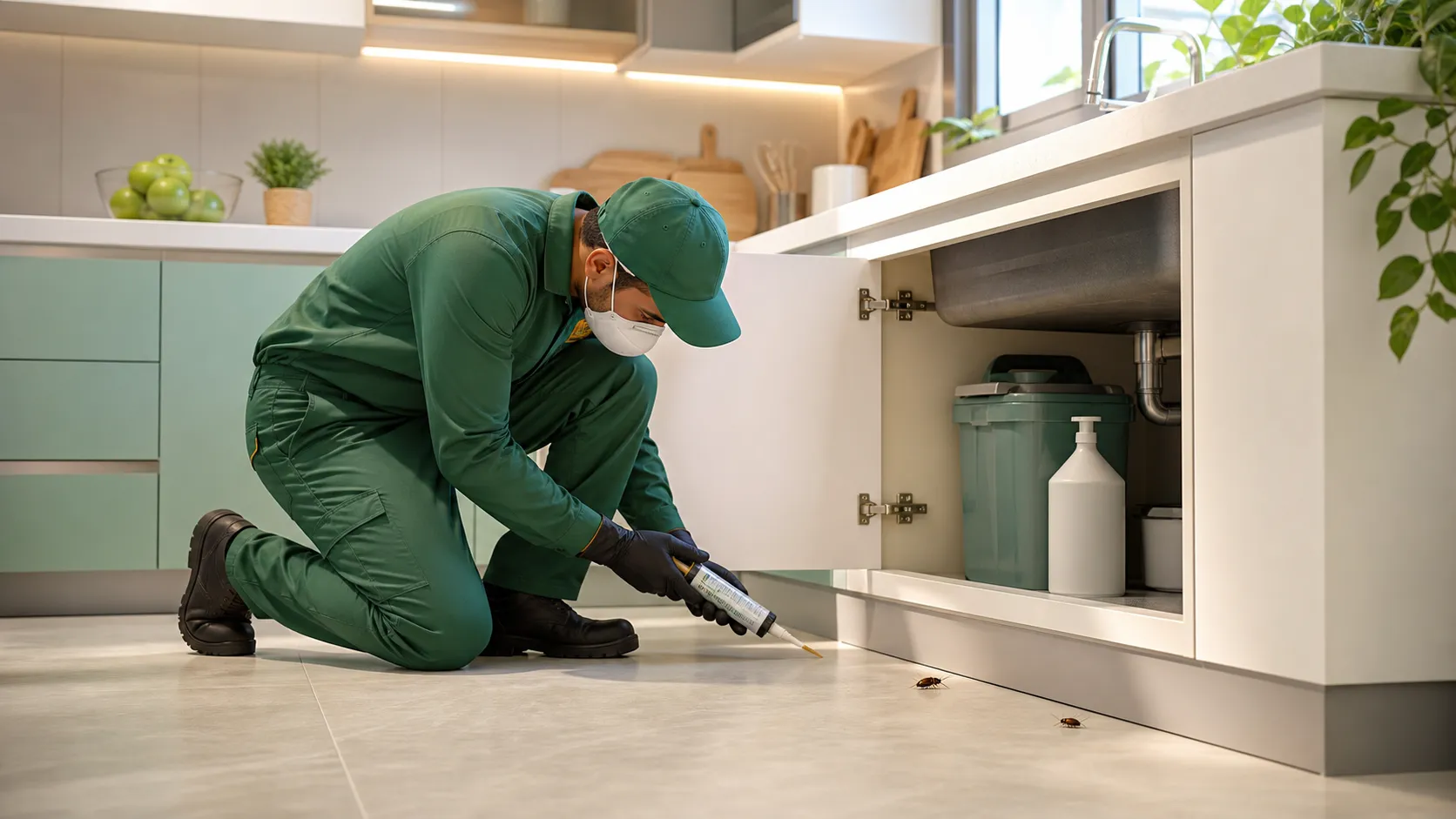
If you have ever walked into the kitchen at night and spotted a cockroach darting towards the sink, you are not alone, and it is not a reflection on how clean you keep the place. Kitchen cockroaches are one of the most common pests in Egyptian homes, and one of the most upsetting, because they crawl over your food and your plates. The worst part is not even the sight of them. It is the fact that you spray, and spray again, and a few days later they are back as though nothing ever happened.
In this guide we will walk you through it step by step: why cockroaches head for the kitchen, which species find their way in, why they keep returning after you spray, the practical steps you can start today, the difference between gel bait and random spraying, and when the problem has grown beyond what you can handle alone. Everything here is based on real work we do every day, not theory, so you come away with a plan you can act on. Stick with us to the end, because a few points most people overlook are precisely the ones that let cockroaches come back.
Why Do Cockroaches Appear in the Kitchen?
To a cockroach, the kitchen is close to perfect, because it brings together the three things this insect is always hunting for: food, water, and warmth. Any corner with crumbs, damp, or a warm, tight space is somewhere it can live and breed happily. So it is no accident that most infestations start in the kitchen and the bathroom rather than the bedroom or the living room. Here is what draws them in.
Exposed food and crumbs. Any scrap on the floor, unwashed plates left in the sink overnight, an open bag of sugar, or crumbs under the cooker are all a meal to a cockroach. Even when a kitchen looks spotless, crumbs fall into places you never see, like cupboard seams and the gaps under appliances.
Damp and water sources. Cockroaches need water even more than food, and can survive a spell without eating but not without drinking. That is why they gather under the sink, around the pipework, and anywhere there is a drip or lingering damp. A small leak you have never noticed can be the main reason they have settled in.
Warmth and tight spaces. Behind the fridge and the cooker there is steady warmth, darkness, and a snug fit, exactly what a cockroach loves. This insect hates light and open spaces, and looks for a narrow, warm crack to hide in by day and emerge from at night.
Entry points. Even if your kitchen is sorted on the inside, cockroaches find a way in: drain pipes, plugholes, the cracks around pipework, and even cardboard boxes from the supermarket with egg cases tucked inside. In blocks of flats, shared pipes let them move from one flat to another with ease.
The key point: if you see a single cockroach during the day, that is not a lost stray. Cockroaches hide by day, so one appearing in broad daylight usually means the hidden population is large enough that the place is crowded and some have been forced out. What you see is a small fraction of what is actually there.
Types of Cockroaches That Get Into the Kitchen
Not all cockroaches are the same, and the difference is not just about appearance. It changes the treatment itself. In Egyptian homes we mostly deal with two species, each with its own behaviour and its own way in.
The Small German Cockroach
This is the species that nests inside the kitchen itself, and it causes people the most grief. It is small and light brown, and you will find it in cupboard seams, behind appliances, and in the warm, tight spaces inside. The core problem is that it breeds at an alarming rate, and the female carries her egg case with her until it is almost ready to hatch, which makes it hard to reach. It is also famous for developing resistance to many of the pesticides on the market, which is why ordinary spraying so often fails.
Because it lives inside the kitchen rather than coming in from outside, this species needs gel bait placed at the breeding points. If your infestation is this kind, surface spraying will not solve it no matter how often you repeat it.
The Large American Cockroach
This is the big one you sometimes see coming up out of a plughole or a drain. It is reddish brown and far larger than the German cockroach. It usually does not nest inside the kitchen, but comes in through drain pipes and plugholes looking for water and warmth, especially in hot weather. It can make a short flight or glide, but it mainly walks and runs at speed.
Treating this species focuses on the drain entrances and plugholes, to close off the route it comes in by. If you only treat inside the kitchen and leave the plughole open, it will simply come back the same way.
How to Tell Them Apart and Why It Matters
In simple terms: the German cockroach is small and lives inside; the American is large and comes in through the drains. Sometimes you have both at once. Why does this matter? Because the treatment plan differs. The German cockroach calls for gel at the breeding points inside the kitchen; the American calls for treating the pipework and drains; both together call for a plan that covers both fronts. This is the first reason that identifying the species is the very first step in any serious cockroach control effort.
Why Do Cockroaches Come Back After You Spray?
This is the point that frustrates so many people. You buy a spray, use it, see dead cockroaches, and a week or two later they are back as if you had done nothing. The reason is not that you stopped spraying. It is that spraying itself does not solve the problem at its root.
Spraying only kills what is visible. The spray reaches the cockroach walking in front of you, but not the ones hidden inside cracks, pipes, and cupboard seams. And the hidden cockroaches are the majority. You kill the ten you can see and leave the ninety you cannot.
The eggs are protected inside their case. The female lays her eggs in a hard case called an ootheca, which shields them from the pesticide. So even if you kill every visible cockroach, the cases stay intact, and a few days later they hatch and release a whole new generation. That is why the problem returns just as the eggs finish hatching.
Spraying scatters cockroaches rather than gathering them. The smell of the pesticide makes cockroaches flee and spread further away. So you may, with your own hand, move the problem from the kitchen to the bedroom, or spread it into rooms it was never in. That is the exact opposite of what you want.
The outside source stays open. If the cockroaches are coming up from the drains or from a neighbour’s flat through shared pipes, then no matter how much you spray indoors, the next wave comes up by the same route. You are treating the symptoms while the door is still wide open.
The takeaway: cockroaches returning after you spray does not mean you have fallen short. It means random spraying is the wrong approach for this insect. The answer is not a bigger dose or more frequent spraying, but a different method that targets the nest, the eggs, and the source rather than the cockroach you can see. That is what the steps below cover.
Step-by-Step: How to Get Rid of Cockroaches in the Kitchen
This is the practical plan you can begin today, arranged in the order that works best, with each step building on the one before. Minor infestations respond well to these steps; large ones, or ones with a drain-based source, will usually need a specialist, and we will tell you exactly when in the next section.
Step One: Clean Up Food Sources and Cut Off the Crumbs
The first thing to do is starve the cockroaches. Do not leave food exposed, on the table or in the sink. Wash the dinner plates before bed rather than leaving them for the morning. Keep sugar, flour, pasta, and any dry food in tightly sealed containers, not open bags. Clean crumbs from under the cooker and behind the fridge, not just the visible surface. Empty the bin regularly, keep the lid shut, and never leave an open rubbish bag in the kitchen overnight.
The aim is to cut the food source to a minimum. When a cockroach cannot find food, it grows weaker and becomes far more willing to feed on the gel we will place next, which makes the treatment work better.
Step Two: Dry Up Water Sources and Fix Any Leaks
Cockroaches need water more than food, so take it away from them. Fix any drip under the sink or in the pipework, however small. Dry the sink before bed, and wipe up standing water on the worktop. If there is constant damp in a particular corner, try to ventilate and dry it out.
This is the point most people overlook, and one of the biggest reasons cockroaches keep surviving. A kitchen that is dry at night is an uncomfortable place for a cockroach; a kitchen with a leak and standing water is paradise.
Step Three: Seal the Hiding Places and Cracks
Cockroaches hide in narrow cracks, so closing those off makes life harder for them and reduces their breeding spots. Seal the cracks around pipework, in cupboard seams, behind broken tiles, and any narrow opening in the wall, using silicone or a suitable filler. Check behind appliances and the hidden corners.
Sealing cracks does two things: it cuts down hiding and breeding spots, and it closes off some entry points. But it complements the other steps rather than replacing them, because if there is an established source indoors, sealing cracks alone will not be enough.
Step Four: Apply Gel Bait at the Right Points
This is the step that makes the real difference. Gel works in a completely different way from spraying: the cockroach feeds on it, returns to the nest, and the active ingredient passes to the rest of the colony, so you hit the ones in hiding, not just the ones in view. Place small dots of gel where cockroaches walk and hide: cupboard seams, behind appliances, around pipework, under the sink, and the tight corners.
This matters: place the gel away from food preparation surfaces and out of children’s reach, in the hidden corners where the insect travels but a person never touches. Do not wipe the spots away, so they keep working, and do not combine gel and spray in the same place, because the smell of the spray drives cockroaches away from the gel.
Step Five: Treat the Drains if the Infestation Comes From Outside
If you have noticed the larger cockroaches coming up from the plughole or drain, you need to deal with that route. Cover any plugholes not in use, especially at night. This treatment sometimes needs a specialist to handle the pipework properly, because surface treatment of the plughole is not enough if the source is inside the pipe itself.
Step Six: Follow Up After a Week to Break the Life Cycle
This is the step that separates a temporary fix from a lasting one. After seven to ten days, check the area and reapply gel if it has run out or been wiped away. The egg cases present at the first treatment hatch during this period, and following up ensures you hit that new generation before it grows and lays eggs again. Stop after the first round, and the new generation completes the cycle and the problem returns.
Carry out these steps in order and with patience. Cockroaches do not vanish in a day, but if the infestation is within reason, you will notice their activity dropping over a week or two until it disappears. If you do all of this and the problem persists, that is a sign the infestation is larger or its source is external, and that is the moment for a specialist.
Gel Bait Versus Random Spraying
Many people still think cockroach control means a can of pesticide, when in reality that is the weakest approach and the one most likely to fail against this insect. The core idea is simple: spraying repels and kills what is visible, while gel reaches what is hidden. The cockroach feeds on the gel and carries it back to the nest, so the active ingredient enters the colony from within and hits the ones no spray could ever reach. This table sums up the difference:
| Point | Random Spraying | Gel Bait |
|---|---|---|
| What gets affected | Only the cockroaches visible on the surface | The whole colony, as the active ingredient passes to the nest |
| Reaching the hidden eggs | Does not reach them; the case shields the eggs | Hits the hatching generation when you follow up |
| Effect on the other cockroaches | Scatters them and drives them to places further away | Draws them to the gel so they feed on it |
| Safety near food | A cloud of pesticide settling over many surfaces | Specific dots in corners well away from food |
| Smell and disruption | A strong smell, sometimes forcing you to leave the room | Small dots with no choking smell |
| Long-term result | Temporary; the infestation returns | Closes the infestation down when done right and followed up |
This does not mean spraying has no role at all; a specialist may use additional techniques depending on the infestation. But for do-it-yourself home use, gel at the right points is far smarter, safer, and more effective than spraying the whole kitchen at random.
When Do You Need a Specialist?
The steps above make a real difference with minor and moderate infestations. But some cases are beyond any home remedy, where insisting on tackling it alone wastes your time and money while the problem grows. These are the signs that it is time to talk to a specialist:
The infestation is large and widespread. If you are seeing plenty of cockroaches, or seeing them during the day, or they have spread to the bathroom and other rooms, this needs a comprehensive plan and follow-up, not a single round of gel.
Cockroaches are coming up from the drains and pipework. If the source is in the plugholes and drain pipes, surface treatment is not enough, because the problem is inside the pipe. This needs specialist treatment of those entry points to close off the route at its root.
You have tried everything and the problem keeps coming back. If you have cleaned, dried, applied gel, and sealed cracks, and the cockroaches still return, there is probably a hidden source you are not reaching, or the infestation is coming from a neighbour’s flat through shared pipes. A specialist can read this and pinpoint the real source.
There is pesticide resistance. If the cockroaches seem unaffected by anything you do, the species you have may have developed resistance, which calls for materials and placements that change with the case. That is specialist work.
A restaurant kitchen or a sensitive setting. For a restaurant, a cafe, or anywhere food is served to the public, this is not just about comfort. It is tied to your reputation and to inspections, and it needs a regular, professional control programme.
In these cases, our cockroach control service relies on first identifying the type of infestation, then placing gel bait at the breeding points, treating the pipework and drain entrances, with follow-up that breaks the life cycle and a written guarantee on the kitchen and bathroom. We treat the source rather than the symptoms. And if you have other pests at home, our household pest control covers the whole house in a single plan.
Tips to Stop Cockroaches Coming Back
Once you have got rid of the cockroaches, the work does not end at the last one. A few simple habits shut the door on their return, and because cockroaches hunt for food, water, and warmth, most prevention revolves around those points. These tips complement any treatment; they are not a substitute for a specialist if the infestation is large.
- Do not leave food exposed at night. Cover food, wash the plates before bed, and clear the crumbs before you sleep.
- Clean behind appliances regularly, not just the visible surface. Under the cooker and behind the fridge are where crumbs and warmth gather most.
- Fix any water leak the moment you notice it, under the sink or in the bathroom, to remove the damp the cockroaches rely on.
- Cover plugholes not in use, especially at night, to close off the route for cockroaches coming up from the drains.
- Empty the bin regularly, keep the lid shut, and never leave open rubbish bags in the kitchen.
- Inspect the boxes and bags you bring in from the supermarket, because cockroaches and their egg cases sometimes hitch a ride.
- Seal new cracks as soon as you spot them, around pipework and in the tiling, before they are occupied.
Cleanliness cuts the problem down a great deal, but it does not always end it if the source is external, such as a building’s shared pipes. So if you notice any sign of their return, do not wait for the infestation to grow. Early intervention is always cheaper and easier than late treatment.
Frequently Asked Questions About Kitchen Cockroaches
Why do I see a single cockroach during the day?
Cockroaches hide by day and emerge at night, so one appearing in broad daylight usually means the hidden population is large enough that the place has become crowded. The one you saw is not a stray; it is usually a sign of a nearby nest with far greater numbers. Do not dismiss it or wait to see another before you act.
How do I tell which type of cockroach I have?
By size and location. The German cockroach is small and light brown, and lives inside the kitchen in cupboard seams and behind appliances. The American is large and reddish brown, and usually comes up from the plughole and drain. The type determines the treatment: the German needs gel at the breeding points, the American needs treatment of the drain entry points.
Can cockroaches be eliminated on the first attempt?
With minor infestations, the first round makes a big difference and clearly reduces activity. But fully getting rid of cockroaches needs follow-up because of the egg cases that hatch after treatment. That is why following up after a week is essential, not a luxury. The full result comes when the life cycle is completely closed.
Are gel and bait safe around children and food?
Yes, when placed correctly. Gel goes down as small dots in specific, hidden spots well away from food preparation surfaces and out of children’s reach, not as a spray that coats every surface. This is safer than aerosols because it is concentrated only in the insect’s corners. Just be careful to place it where children cannot reach, and cover food while applying it.
I cleaned the kitchen thoroughly, so why are there still cockroaches?
Cleanliness reduces the attraction but does not entirely prevent entry. Cockroaches come in through drain pipes, from a neighbour’s flat via shared pipes, or hitch a ride in boxes from outside. The cleanest kitchen can still get cockroaches if there is an open entry point or a breeding source nearby. So do not blame yourself; focus on closing the entry points and treating the source.
Do cockroaches really carry diseases?
Yes, and that is one of the most important reasons to deal with them quickly. Cockroaches travel through drains and rubbish and then over your food and plates, so they carry bacteria that can cause stomach upsets and food poisoning. They also produce substances that trigger allergies and asthma, especially in children. Their presence is not just an unpleasant sight; it is tied to the health of everyone in the home.
Do the chalk and powder sold in shops work?
Their effect is usually weak and short-lived, and many are of unknown origin. The greater danger is that they can reach food or a child, becoming a hazard rather than a solution. It is best to steer clear of them and use an approved gel at measured points, or talk to a specialist if the infestation is large. The right solution is safer and more economical than experimenting with random products.
I see more cockroaches after applying the gel; is that normal?
Yes, and it is a good sign. As the gel starts to work, the hidden cockroaches come out of their nests as the active ingredient affects them, so you see them in places you had not before. That means the treatment has reached them. This activity drops over a few days until it disappears, so do not worry and do not spray over the gel.
Can I get rid of cockroaches while pregnant or with a newborn?
The safe approach here is to avoid blanket spraying and rely on gel at points well away, or to talk to a specialist who will work carefully. Gel in hidden corners away from food and children’s reach keeps contact to a minimum. If you work with a company, tell them the household circumstances from the start so they can place the materials with your comfort and safety in mind.
I have an infestation in both the kitchen and the bathroom; what do I do?
Treat both at the same time so the cockroaches do not flee from one to the other. Inspect the kitchen and bathroom thoroughly, identify the active spots, and treat them together with gel at the breeding points along with treatment of the drain entry points. Infestations that have spread need a more precise plan and follow-up, and they are usually easier with a specialist.
Do I need to empty the cupboards before treatment?
You do not need to empty everything, but it helps to have access to the key areas such as under the sink, behind appliances, and the cupboard seams, and to clear food from the spots where gel will be placed. If you work with a company, the technician will tell you exactly what is needed before the visit, and it is usually a few simple steps.
Is home control enough, or do I need a specialist?
It depends on the size and source. A minor infestation with a source inside the kitchen responds well to home steps. But a large one, or one coming up from the drains, or one that keeps returning despite your efforts, needs a specialist to pinpoint the source and treat it with a guarantee. The difference is not just the pesticide; it is knowing the insect’s behaviour and where it breeds.
In Summary
Getting rid of cockroaches in the kitchen is no miracle, but random spraying that comes back a few days later will not do it either. The whole idea is to starve the cockroaches, dry up the water sources, and seal the hiding places, then target the nest and the eggs with gel bait rather than the cockroach you can see, and follow up after a week to break the life cycle. Do this in order and with patience, and you will find cockroach activity dropping within a couple of weeks with reasonable infestations.
But if the infestation is large, or the cockroaches are coming up from the drains, or you have tried everything and they still come back, the problem has grown beyond a home remedy, and persisting wastes your time and money. The smartest move is to treat the source properly the first time. Our cockroach control service covers identifying the type of infestation, gel bait at the breeding points, treatment of the pipework, and follow-up that breaks the life cycle, with a written guarantee on the kitchen and bathroom.
If you have read this far, you are serious about ridding your kitchen of cockroaches. The next step is simple: contact us now whenever suits you, tell us what you are seeing and where, and we will identify the source and treat it at the root. Give your kitchen back its cleanliness and your own peace of mind.
More articles for you
 woodworm
 Termites and Woodworm: The Damage and How to Protect Your Furniture
Termites and woodworm eat furniture from the inside out. Learn the signs of an infestation, the difference between the two, the damage they cause, and how to protect your timber before it is too late.
Read article bedbugs
 Bedbugs: What They Look Like, the Tell-Tale Signs, and How to Get Rid of Them for Good
Wondering whether you've got bedbugs? Here's what a real bedbug looks like, the signs to watch for at home, how to tell bedbug bites from mosquito bites, and the steps to get rid of bedbugs at the root.
Read article